Ondřej Lengál and Kamil Malinka received their appointment decrees as associate professors. Congratulations!
The ceremonial confirmation of the fact, known for some time now, that the Faculty of Information Technology has two new associate professors in its ranks, took place on Wednesday, November 26, in the auditorium of the BUT Rector's Office in Brno. Ondřej Lengál and Kamil Malinka, both from the Department of Intelligent Systems, have added the new academic title to their names.
Kamil Malinka's habilitation lecture, "Protection mechanisms against deepfake-based attacks," delivered in June of this year, summarizes Malinka's long-term research activities, which he also develops within the Security@FIT research group. Malinka focuses on the broader context of cybersecurity in AI. His research is not limited to technical solutions – he is also interested in behavioral aspects, such as user behavior when using selected security tools or the education of future IT professionals. He is also interested in the impact of deepfakes on voice and facial biometrics. According to Malinka, the effectiveness of cybersecurity procedures and tools depends heavily on users' understanding of them (or understanding of the consequences of not following them) and on users' willingness to continue to follow them. Malinka himself classifies his research project under the category of usable security and the most general question of "How to design security measures so that they cannot be misused?" When asked where he ranks the title of associate professor in his professional career, he replies: "Associate professorship is a pragmatic personal goal that I value. I have taken over the Security research group, and I need the appropriate academic title to lead the team. Of course, it also gives me the opportunity to continue my research." As for his professional future, Malinka mentions his desire to broaden the scope of AI security. He cites the example of large language models, which pose a number of relatively new security challenges, including prompt injection attacks, data poisoning, and jailbreaking. Taking a longer and bolder view, Malinka mentions the fundamental importance of post-quantum cryptography and the security aspects of hybrid quantum and neural networks as research topics. The number of topics in the field of cyber security will only continue to grow.
Kamil Malinka receives his appointment decree as associate professor from Ladislav Janíček, Rector of Brno University of Technology. | Author: Václav Koníček
Author: Václav Koníček
The second new associate professor at the Faculty of Information Technology is Ondřej Lengál. His habilitation thesis is entitled "Awesome Automata: Algorithms and Applications," clearly referring to his research focus. Lengál works in a field that many believe will see significant developments in the near future. He is an expert in quantum computing, or, as he himself specifies, in verification within quantum computing with the aim of ensuring that these calculations, and by extension programs, do not contain errors. The main goal of his professional efforts is therefore to provide a framework for the automated formal verification of the correctness of quantum programs, which uses automata and logic for the compact representation of complex sets of quantum states with several dimensions of infinity. As Lengál points out, the creation of quantum programs is an extremely demanding discipline, and verification is a desirable part of the development process and a prerequisite for achieving the necessary accuracy and safety of their operation. Quantum programs are inherently probabilistic—at any given moment of their execution, they are in a superposition of states. The various possible states of the program then have different degrees of probability. This makes it easier for programmers to make mistakes. On the other hand, quantum computers are a real promise. Optimistic scenarios predict a quantum boom within the next 10 years. They are expected to be able to effectively solve problems that are very difficult to solve with classical computers. Quantum algorithms promise significantly higher computing speeds, an example of which is factorization in cryptography. After all, breaking the current RSA encryption of web traffic in connection with the advent of quanta is often mentioned as a key cybersecurity challenge in the coming years. And it is also a professional challenge that Lengál wants to devote himself to in the coming years.
Ondřej Lengál is also a new associate professor at FIT VUT | Author: Personal archive of O. Lengál
In the future, the greatest benefit of quantum computers could lie in the simulation of quantum systems in drug development, materials research, and experiments in the fields of physics and chemistry in general. For now, this is just a promise. The state known as quantum supremacy, when we will have a real-world case that has been solved much faster with the help of quantum computing than with classical computers, is currently the most discussed goal. Whether we view the current state of quantum computing with hope or slight concern, it is clear that educating future talent for this field will also be a priority for FIT. Ondřej Lengál also sees the importance of his recent associate professorship in this context: "Quantum experts will be needed. That's why I'm happy about my associate professorship, which will allow me to continue my research and educate new talent."
Congratulations, and we look forward to new successes in research and education at FIT.
Interview with our graduate: "FIT offers you many open doors," says Jaroslav Kadlec from Thermo Fisher Scientific
The boy who used to take apart electronics at home has become a software manager at a global technology company. What's more, that company is a world leader in a field that matters – from drug development to microchips. His journey, shaped by his studies at FIT VUT, is a story of perseverance, fascination with graphics, and a quest for new challenges. Jaroslav Kadlec openly describes what it is like to learn "on the fly," lead international teams, and balance demanding studies, family needs, and his ambitions. In the interview, he explains what he believes determines success in software development today and why FIT graduates are well prepared for a field in which one person alone cannot achieve much.
Ing. Jaroslav Kadlec, Ph.D., a graduate of FIT VUT with a focus on computer graphics (Department of Computer Graphics and Multimedia), completed his doctoral studies in 2010. Since 2014, he has been employed by Thermo Fisher Scientific, currently in the position of software manager.
What led you to choose to study information technology at university? Were you already passionate about computers and electronics in high school? Or was it more of a pragmatic choice driven by the prospect of a well-paid job?
As a child, I was fascinated by all things electronic. If my parents left me alone, I would end up dismantling and taking apart some of the electronics in our home, even though I didn't really understand how they worked. Electronics and electricity were my obsession. I attended a sports-oriented elementary school and did track and field. One of my classmates introduced me to his brother, who was studying electrical engineering at a technical high school with a focus on microprocessor technology. The two of them had an Atari computer, and I was completely fascinated by what they could do with it. Logically, I wanted to go to the same school. And from my first year of high school, I was determined to learn how to program. It was such a huge challenge compared to everything else I had experienced in my life so far that I really turned into the proverbial nerd. I started programming with Basic, then moved on to Pascal, Assembler, and finally C and C++, the latter two at college. So yes, from sixth or seventh grade on, my path was pretty clear.
It really seems like you had your path figured out. In that case, was your first year of college a challenge for you, or did you get through it without any major problems thanks to your long-term interest in programming and electronics? How do you remember your bachelor's studies?
I was actually part of the first generation of people who enrolled at FIT (the faculty was established in 2002, editor's note). In my freshman year, I started as a student at the Faculty of Electrical Engineering and Computer Science (FEI) at BUT, which offered a degree program in Computer Science and Information Technology. During my first year, the faculty was divided into FIT and FEKT (Faculty of Electrical Engineering and Communication Technologies), and thanks to my grades, I had the opportunity to choose. I knew exactly that I wanted to continue at FIT. I became increasingly interested in computer graphics and multimedia, and in fact all the fields that were developing there at the time under Pavel Zemčík.
What attracted you so much to graphics and imaging methods that they became your specialization during your studies at FIT?
I was interested in computer games and their programming. I had already put together a few smaller games in Pascal. When I got to college, I wanted to improve my skills. At that time, there were already graphics cards with OpenGL, which could be used to create lights and other things that I couldn't calculate in Pascal before. This led me to questions about how such enormous computer performance actually works at the processor level and so on. And again, it was a huge challenge. Graphics accompanied me throughout my studies. The topic of my thesis was user interface architectures in a 3D environment, and the output of my thesis was movement in a virtual environment, navigation in it, etc. At the end of my master's studies, I was faced with a choice: either accept the offer to continue with a doctorate, or join the army, because I had already been drafted. So I admit that my motivation to pursue a doctorate was twofold...
Were you attracted to a doctorate purely from a professional standpoint?
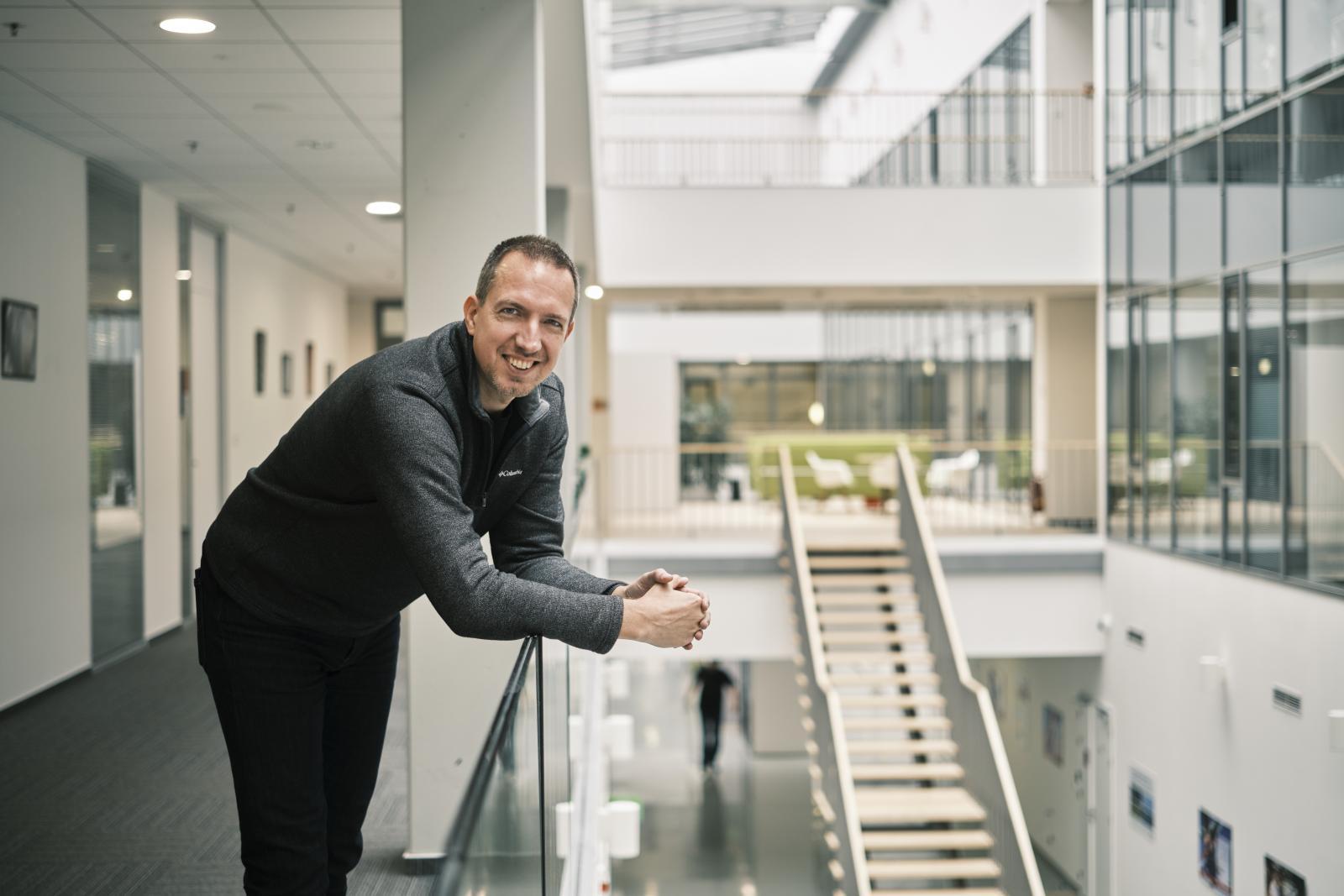
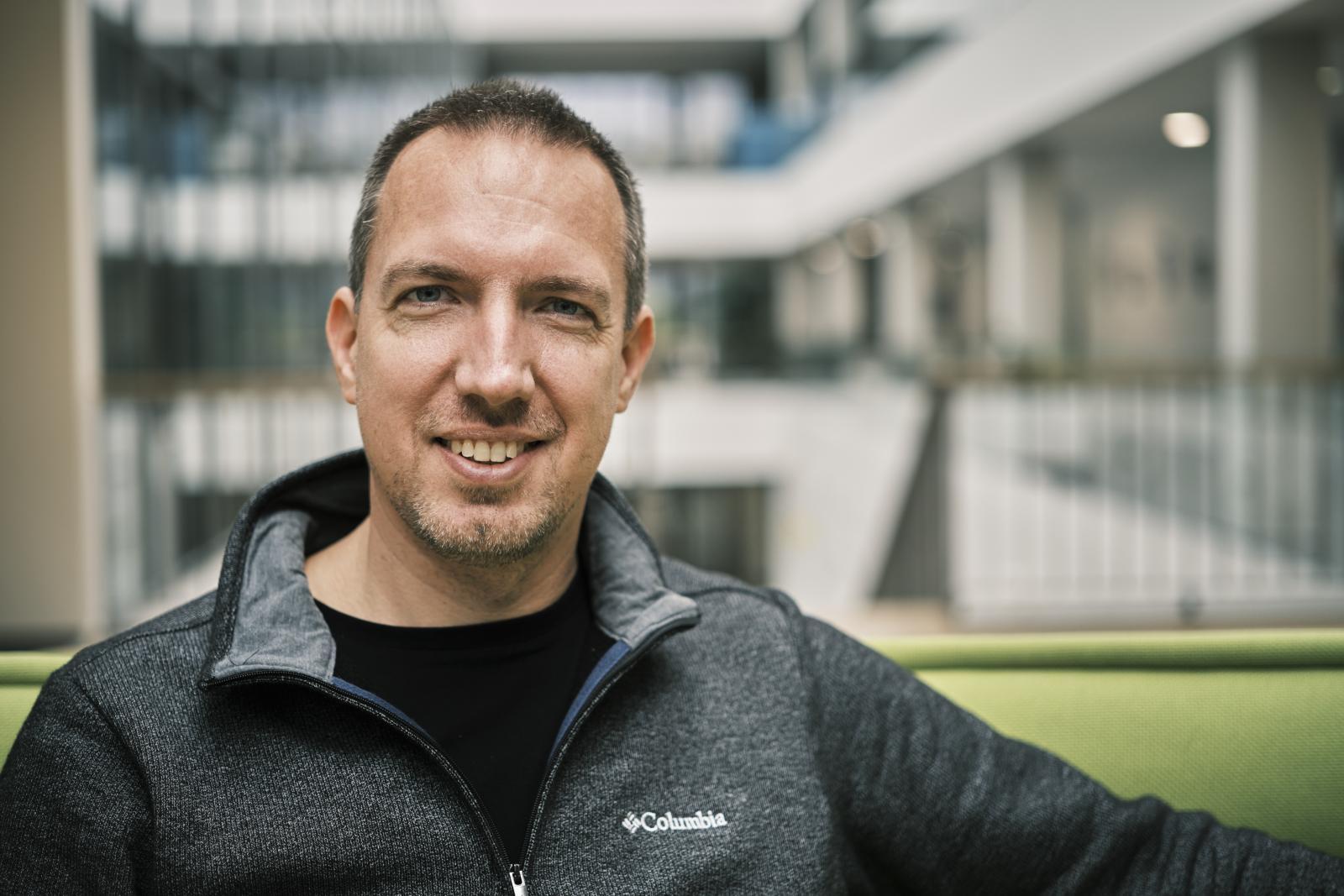
There were several motivations: I like to explain things, so I wanted to teach. At the same time, I wanted to learn something new myself, to move forward. And in my case, "forward" meant moving in the direction of automatic user interface generation. In the end, my PhD took seven years. In the meantime, we had a child, so it was challenging. And yes, because of the difficulty, I even got to the point where I was thinking about giving up my PhD due to the exhausting time demands.
Author: Martin Horný
During your PhD, you got to work in a rather unusual field of industry: you were involved in interactive simulations for training armed forces. How did you come by this opportunity?
I was lucky. I felt the need for a financial injection for our family with a small child. The offer then came through another doctoral student at the faculty who was already working for VR Group. I found it interesting and thought to myself, "Simulators are graphics, and that's what I want to do." I started part-time and after two years went full-time. In the end, I worked mainly on modeling—from ballistics to combat vehicle control to simulations of the behavior of large groups of people and the surrounding environment. We also collaborated with the Integrated Rescue System, to which we supplied simulations of floods and fires, for example. I also enjoyed connecting software with hardware. I generally consider the connection between industry and academia to be a good thing. That's why we at Thermo Fisher try to stay in touch with FIT, collaborate with the faculty, offer interesting topics to its students, etc.
You are now in your eleventh year at Thermo Fisher Scientific. What attracted you to working for such a large company?
I was looking for a company that would once again offer me a combination of things that made sense to me. What I liked about Thermo Fisher was that the microscopes they manufacture serve a good purpose—for the production of medicines, the study of viruses, materials science, chip manufacturing... And humanity, good leadership, and good relationships between people at work are extremely important to me. At the time, I had information that this was how things were set up at Thermo Fisher. Looking back, I've always been lucky to have good people around me. For me, that's a huge asset in any job.
What has your career path been like at Thermo Fisher? What does a typical project you are working on today look like?
I joined as a senior software developer. It was a really sharp start, right off the bat, three days after I started, I flew to the United States to bring back the know-how of a company we had acquired at the time. As a developer, I have a very strong need for things to work and for the people who will use our results to be satisfied with them. And after the transfer of development here to Brno, I felt compelled to make sure that everything worked. Not just the development and code itself, but also that the software was getting into production and to users correctly, for example. I smoothly transitioned to setting up processes, communicating with production, collecting requirements, etc. I started doing things that developers don't normally do. After two years, the company came to me with an offer for a management position. At first, I led a small team, and hand in hand with that, I learned to perceive my activity and communication differently, how my actions affect others. I began to develop outside the technical part of development. The team grew, I moved on to other groups, I led an international team, and finally, two and a half years ago, I moved from materials science to a team that works for the semiconductor industry and now has about 80 members. And that's a different world and another huge challenge. I no longer deal with the technical side of things, I don't program. It has become just a hobby, but there is no room for it at work.
Author: Martin Horný
Today, you lead teams of developers and are also involved in deciding who will expand them. What strengths do you look for in job applicants?
I have found it best to choose people with the right attitude, who are enthusiastic about their work, because such inquisitive applicants learn better. In interviews, I don't primarily look for hard skills, such as the ability to program in a specific language. It's important that they are able to communicate well, know how to collaborate, and don't mind doing so. Because nowadays, everything is so complex that no one can do anything alone. I look for people who can work in a team. And also, for example, aren't afraid to work with hardware.
Looking back on your studies and career, how do you see FIT contributing to your professional path? What challenges did you face while studying at this faculty, and what obstacles did you have to overcome?
In my case, it was very time-consuming. Because I need to do things in such a way that I am convinced they are good enough to be submitted, I spent much more time on them than was necessary. From high school to the end of college, I didn't really have much of a social life. It was a heavy burden that I struggled with later in my career as well. On the other hand, FIT gives you a huge number of opportunities, offers lots of new topics, and opens many doors. You walk through some of them, and just peek through others. The school gives you the conditions and inspiration to learn. And FIT does that very well.
I took advantage of the open door to graphic design. And I also took advantage of the help of many great people. Honza Černocký, Adam Herout, Pavel Zemčík, Víťa Beran... For me, FIT is also great from the perspective of my current job role: I feel that FIT graduates are very well prepared for teamwork, they are less theoretical and more practical. As I said, nowadays, you can't do anything on your own. And it's clear that FIT is moving in the right direction in terms of team projects.
The interview with Jaroslav Kadlec is the first in a series of interviews with our successful graduates, which we will be publishing in the coming weeks.
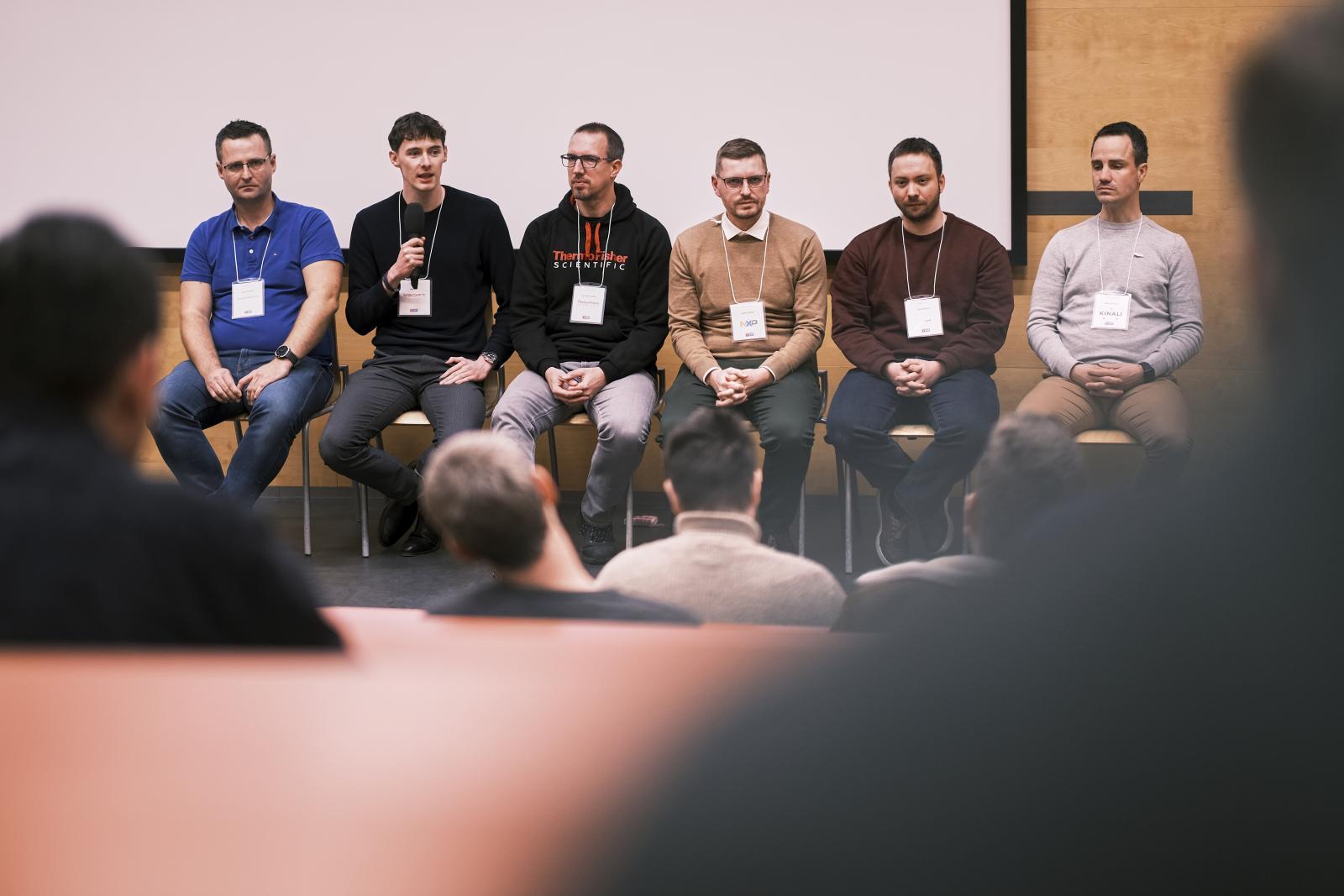
Kadlec regularly participates in faculty events that connect industry and academia. Here he is in a panel discussion at ŽijemeIT 2024 (third from left). | Author: Martin Horný
Faculty spin-off DynaNIC in the top 10 of Deloitte Technology Fast 50 Companies to Watch ranking
As part of the Deloitte Technology Fast 50 project, the multinational auditing company has been compiling a ranking for 26 years with the aim of identifying and recognizing fast-growing innovative technology companies from the wider Central European region. These are entities that use or create cutting-edge technologies in a unique way and are changing the way business is done and the entire business and technological environment.
For several years now, Czech companies have been demonstrating the impressive growth of the country's technology sector through their rankings. They maintain a leading position in the region, although Poland in particular has become a major competitor in recent years. The success of domestic companies is not limited to the main Fast 50 category, i.e., the list of the fastest-growing established companies (the Czech Republic has 14 representatives in the top 50 this year, 5 of which are in the top 10; the ranking was dominated by the domestic company Oddin.gg, which offers one of the world's most advanced platforms for predicting the results of e-sports matches and tournaments using machine learning). The Czech republic had two representatives in the top 10 of the Companies to Watch category, which focuses on finding projects with high potential for further growth. One of them, DynaNIC Semiconductors, has close ties to the Faculty of Information Technology.
Author: Deloitte Technology Fast50 2025: Petra Hajská & Ivan Malý
DynaNIC took fifth place in the Companies to Watch category. Pavol Korček accepted the award on behalf of the company and commented on the success as proof that large technology projects today are not limited to traditional geographical locations: "For us, this is confirmation that even advanced chip technologies can be developed in Central Europe, in Brno."
DynaNIC is a university spin-off focused on the development of advanced network solutions based on the use of FPGA (Field-Programmable Gate Array) technologies. It significantly speeds up network traffic processing by transferring demanding network operations from the processor to programmable network cards with a data flow rate of up to 400 Gb/s. It is thus a response to current challenges related to the rapid development of AI and the increase in the volume of transmitted data. Last year and this year, the company has seen repeated interest from investors, won the prestigious Disrupt Awards competition, and advanced to the finals of the ECSO European Cybersecurity STARtup Award.
Author: Deloitte Technology Fast50 2025: Petra Hajská & Ivan Malý
The quality of David Mihola's thesis recognized in the IT SPY 2025 competition
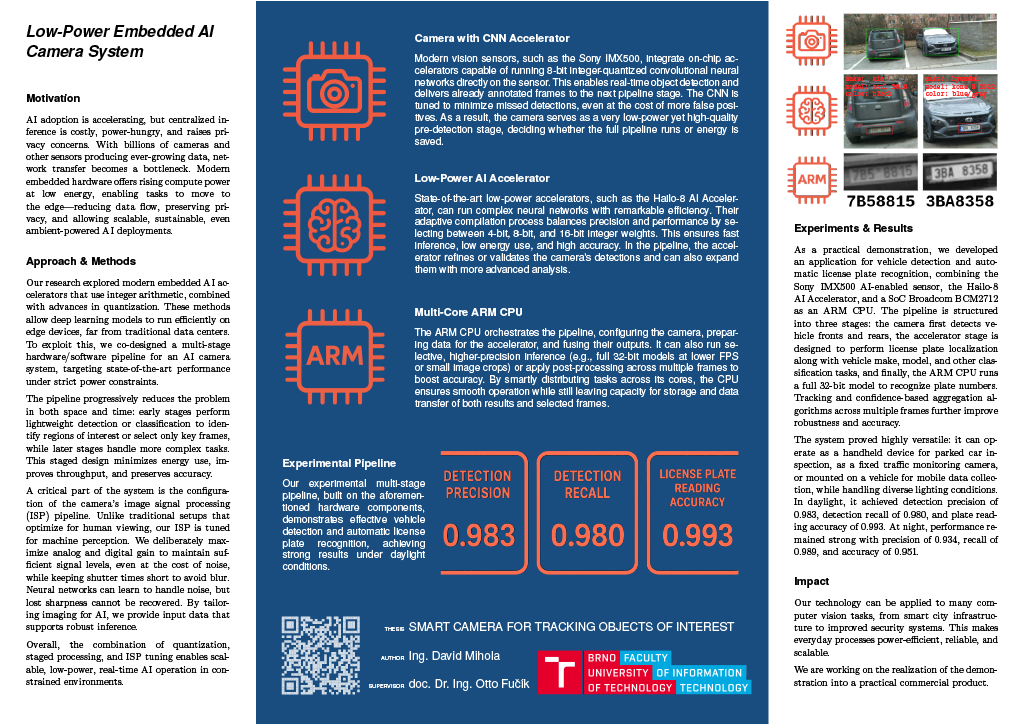
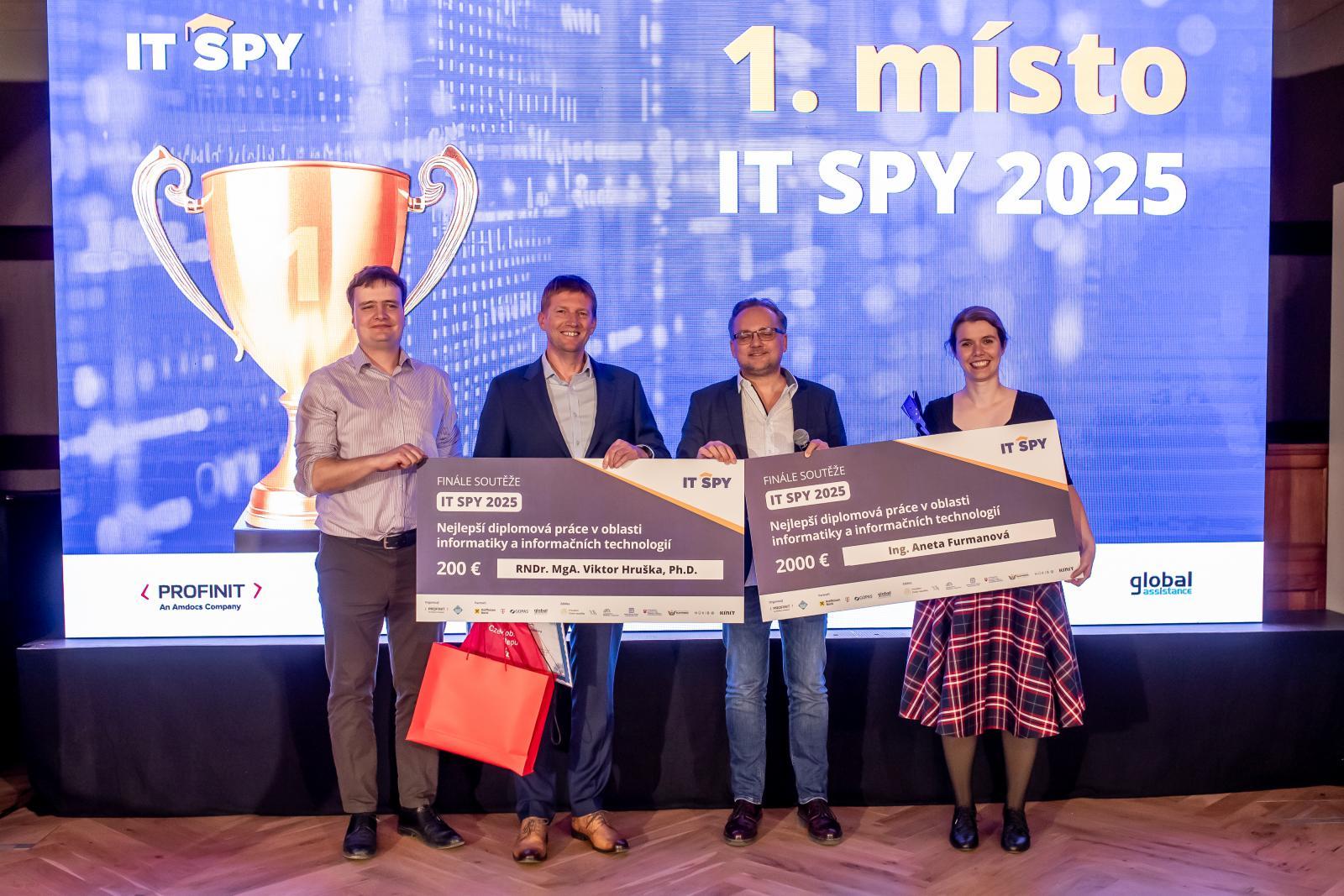
On Wednesday, November 19, 2025, the grand finale of the 16th edition of the prestigious international competition IT SPY took place, which selects the best theses in the field of computer science and information technology from leading Czech and Slovak universities. Theses from FIT often participate in the final round and end up at the top of the competition. This was confirmed again this year, when David Mihola, currently a doctoral student at the Institute of Computer Graphics and Multimedia, advanced to the final stage of the competition with his thesis "Smart Camera for Monitoring Objects of Interest." David ultimately placed in a respectable 4th–8th place out of dozens of submitted projects. The overall winner of the competition was Aneta Furmanová from FEL ČVUT with her work "Modeling the properties of the band structure of sonic crystals using machine learning," which focuses on the design of acoustic structures for reducing noise pollution with the help of AI.
David commented on his result and its context for us: "I think the winning project really deserved to win. And, of course, all the others were also very interesting. Unfortunately, my internet connection dropped out during the demo of my prototype. If the presentation had been successful, I believe my thesis would also have made it onto the podium." He had already described the focus of his work for the faculty website: "My thesis shows that even on a small, battery-powered device, it is now possible to solve demanding artificial intelligence tasks – specifically, detecting vehicles and reading their license plates. This paves the way not only for independently functioning smart sensors, but also for devices to become part of larger systems, such as smart city infrastructure."
The IT SPY 2025 ceremony began in the morning with public presentations of the finalists' work and culminated in the evening with the announcement of the winners in the refectory of the Faculty of Mathematics and Physics at Charles University in Prague. The overall winner of the IT SPY competition received a prize of€2,000 from Profinit, which she can use, for example, to further develop her thesis project. The supervisor of the winning project received €200 as a thank you for the excellent preparation of his student.
We believe that FIT's successes in recent years will continue in 2026. Congratulations to David Mihola and sincere thanks for representing the faculty!
Poster for David Mihola“s project
The overall winner of this year's competition is Aneta Furmanová. | Author: IT SPY
AI4Talents: a day full of artificial intelligence for high school students
The fourth edition attracted more than 200 students to VIDA!
On Friday, November 14, the Faculty of Information Technology at Brno University of Technology, together with the Faculty of Informatics at Masaryk University, organized another edition of the AI4Talents event, which is part of the Days of AI festival. More than 200 high school students arrived at the VIDA! science center in Brno, eager to try their hand at working with artificial intelligence and get a glimpse into the world of academic and corporate research.
The program was opened by Prof. Honza Černocký (Speech@FIT) with a lecture on the truths and myths of AI and the role of mathematics and critical thinking. Doc. Kamil Malinka (Security@FIT) followed with a lecture on the use of AI in cybersecurity. At the same time, lectures by FI MUNI focused on the ecosystems of the future and the use of AI in healthcare.
In the afternoon, students had the opportunity to try out practical workshops – from creating a website with the help of AI, to recognizing a speaker by their voice, to analyzing media using machine learning. The program also included lectures on the use of AI in orbit and working with open-source models.
Visitors could also get a glimpse into the work of the Security@FIT and NES@FIT research groups, which presented technologies for detecting deepfakes and cracking passwords using the Fitcrack tool.
We would like to thank all the partners who participated in the program, especially AT&T, Phonexia, Newsmatics, Red Hat, SAP, Zaitra, Kyndryl, NXP, and VIDA! Science Center, for their expert support and inspiring demonstrations. More information about the event and photos from the event can be found here.


![[img]](https://www.fit.vut.cz/fit/news-file/d310922/VUT_RE_Docentske-doktorske-promoce_listopad_2025-11-26_Konicek_001_1600.JPG)
![[img]](https://www.fit.vut.cz/fit/news-file/d311040/Kadlec_FIT_013_1600.jpg)


![[img]](https://www.fit.vut.cz/fit/news-file/d310690/54937737483_e3264c408f_k_1600.jpg)
![[img]](https://www.fit.vut.cz/fit/news-file/d310249/A67I0968_1600.jpg)
![[img]](https://www.fit.vut.cz/fit/news-file/d310078/AI4Talents-38_1600.jpg)